Recall
Beautiful, fast flashcards that remember for you.
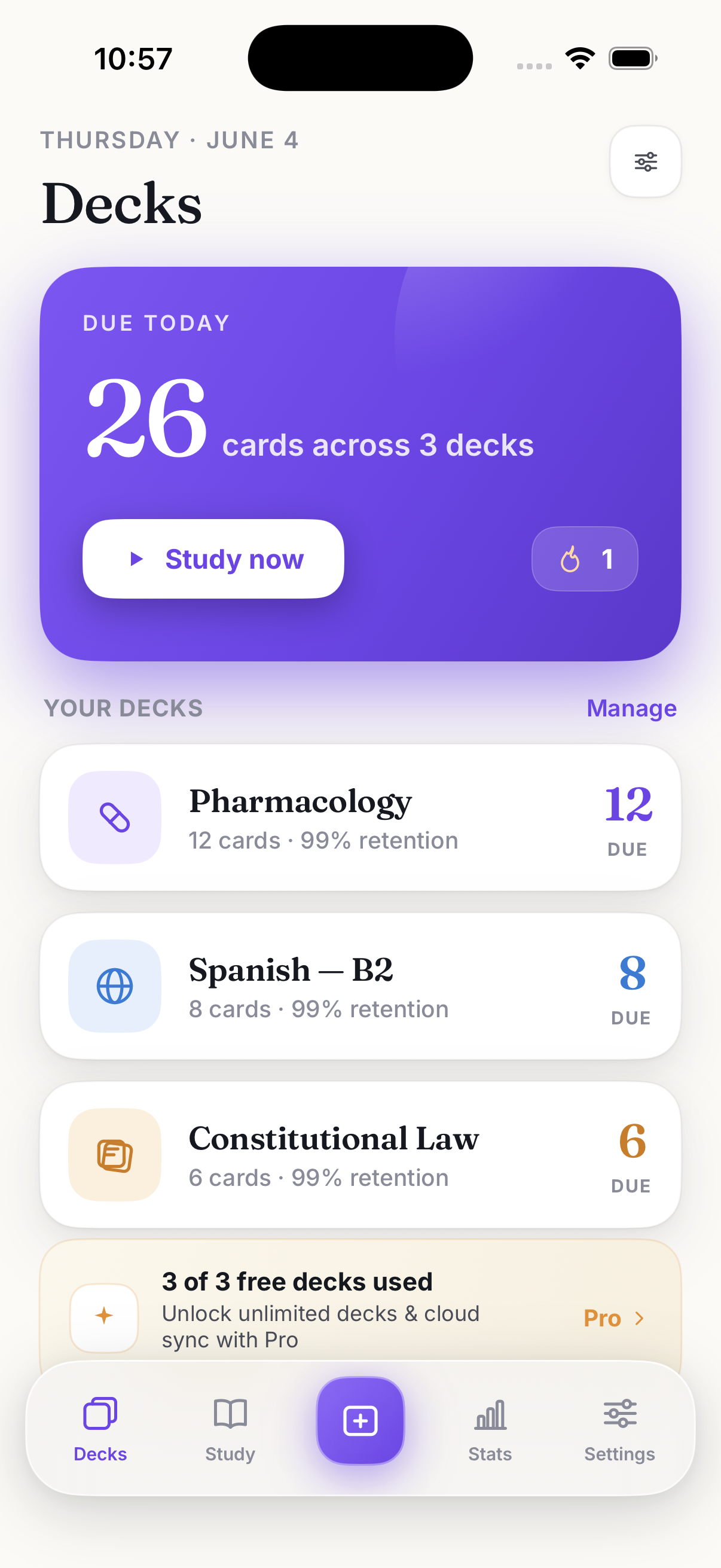
A calm, modern flashcard app built on the FSRS spaced-repetition scheduler. Import your Anki .apkg, CSV, or Quizlet decks on-device, study with a tap-to-reveal loop and four predicted-interval grades, and watch your retention in a real stats dashboard. Fully offline, no account, no ads.
Recall
education
Beautiful, fast flashcards that remember for you
What you get
Recall was built for exactly this.
The core features that make Recall different from the generic alternatives.
FSRS spaced repetition
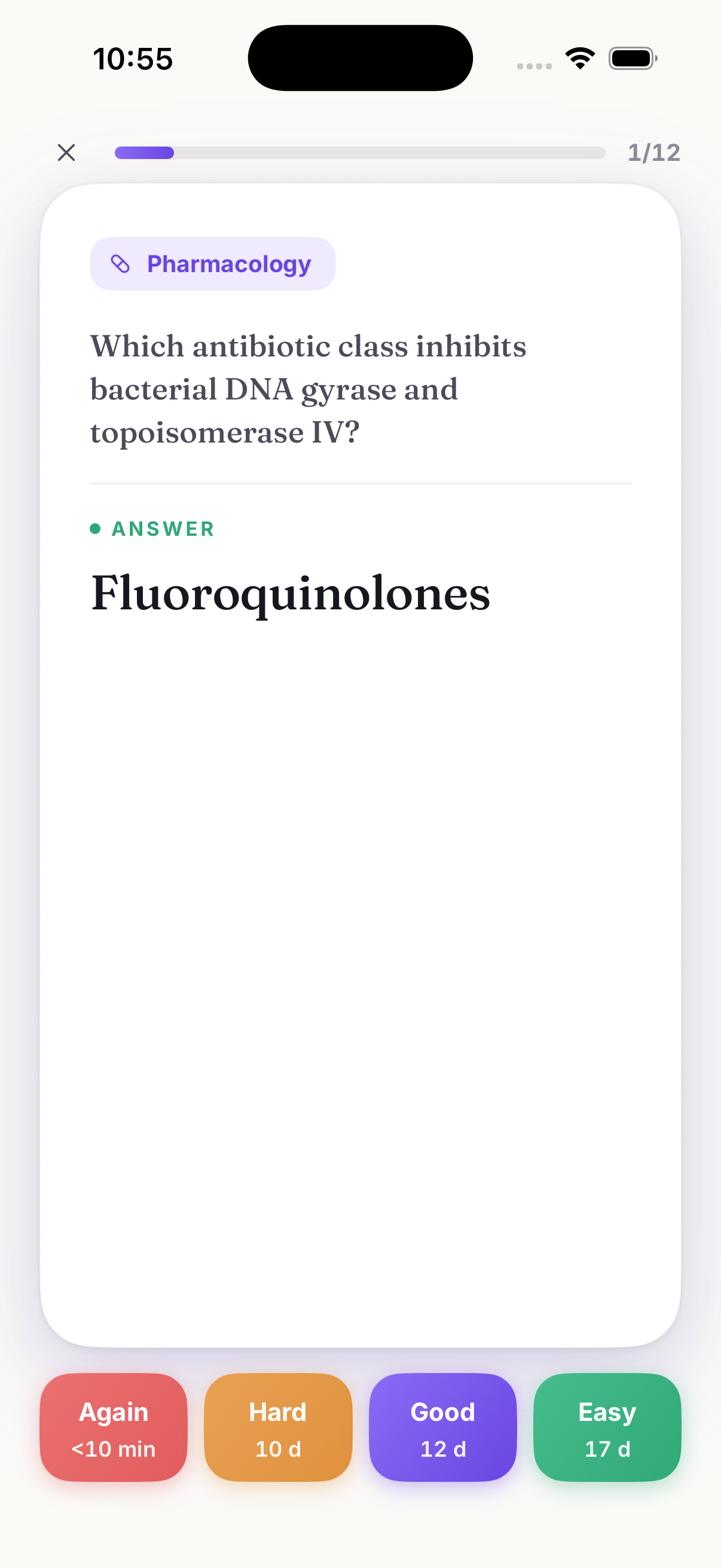
a full, modern scheduler (not crippled on the free tier) — reveal a card, then grade it Again / Hard / Good / Easy, with the predicted next interval shown on each button before you tap.
On-device import (the wedge)
Anki .apkg files (decks, notes & embedded media), CSV files, and pasted Quizlet exports — everything is parsed locally, with no account and nothing uploaded.
Three card types
Basic, Basic + Reverse, and Cloze — with a live cloze preview that shows the blanked question and revealed answer as you type.
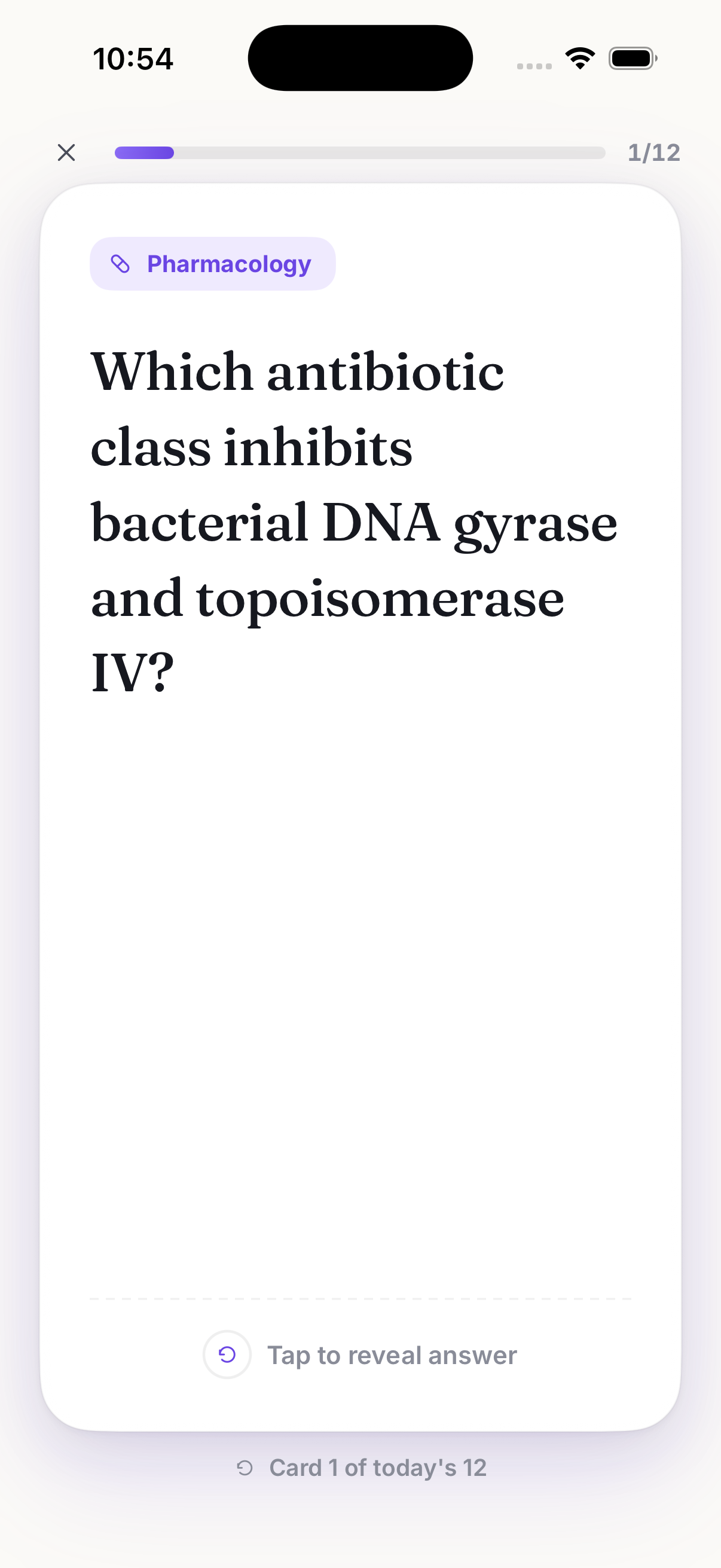
Distraction-free study loop
progress bar, tap-to-reveal, one-tap grading, and undo of your last grade (which fully reverts the card's FSRS memory).
Stats dashboard
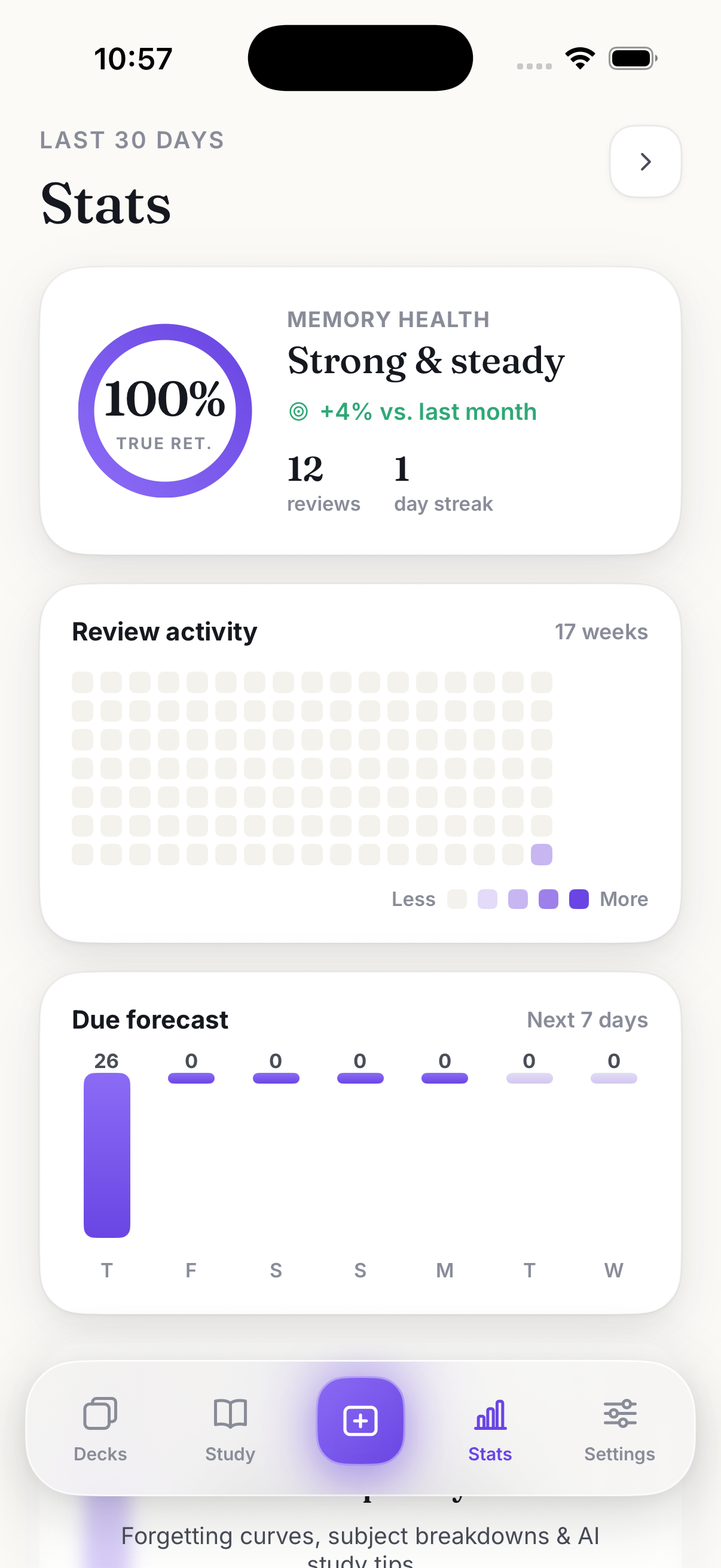
a retention ring, GitHub-style review heatmap, due-cards forecast bar chart, current streak, retention change vs. the prior window, and retention broken down by subject.
Image & audio cards (Recall Pro)
attach a photo or audio clip to a card, shown and playable under the answer during study.
Custom FSRS retention targets (Recall Pro)
set your desired retention percentage (80–97%) and the scheduler adapts; free users stay at the default 90%.
Light / Dark / System appearance, configurable daily limits (new cards per day, max reviews per day), haptics on grade, and local due-card reminders.
Fully offline and private
all decks, reviews, and imports live on-device only — no cross-device sync, no sign-in, and no ads, ever. Pro adds full CSV export of your decks.
A look inside
See it in your hands.
A note from the studio
“I studied for exams on Anki for years and loved the science but never the app. Quizlet felt like a social network with a paywall. I wanted something quiet, fast, and affordable — that respected the work you already put into building your decks.”
How it works
Three steps. No account. No tracking.
01
Add a deck from the import sheet — import an Anki .apkg, import a CSV, paste a Quizlet export, or create one by hand. The app also seeds a couple of sample decks on first launch so you can study immediately.
02
Open a deck and tap Study; the FSRS scheduler builds today's queue from due and new cards, respecting your per-day limits.
03
Read the front, tap to reveal the answer (with any image or audio), then grade Again / Hard / Good / Easy — each button shows the interval that grade will schedule.
04
Recall updates the card's FSRS memory and logs the review; undo reverts the last grade if you mis-tapped.
05
Track progress in Stats — retention, streak, heatmap, subject breakdown, and a due-cards forecast.
06
Free covers up to 3 decks and 300 cards; hitting the cap (or tapping a Pro feature) opens the paywall to unlock Recall Pro.
From the journal
Notes on the practice.
- 01
The Learning Styles Myth: Why Being a 'Visual Learner' Isn't Real, and What Actually Works
The learning styles myth shaped how millions of us study. Here's what researchers found when they finally tested 'visual learners', and the strategy that works for everyone.
2026-10-26
6 min read
- 02
Mood-Congruent Memory: Why a Bad Mood Makes You Remember Only the Bad
Mood-congruent memory explains why a bad mood hands you every failure and hides every win. Here's the psychology, and how to reach the memories your mood locks away.
2026-10-26
7 min read
- 03
Why You Forget to Do the Things You Meant to Do: Prospective Memory, Explained
Wondering why you forget to do things you meant to do? The answer is prospective memory, and the fix isn't trying harder. Here's what psychologists know and how to use it today.
2026-10-25
6 min read
- 04
How False Memories Form: Why You Remember Things That Never Happened
How false memories form, and why yours feel so certain: the science of remembering things that never happened, and simple habits that keep what you recall honest.
2026-10-25
7 min read
- 05
Why You Remember Embarrassing Moments for Years: How Emotion Supercharges Memory
Why do you remember embarrassing moments for years but forget what you studied last night? The neuroscience of emotional memory, and how to use it on purpose.
2026-10-24
7 min read
The dispatch
A dispatch from the studio.
One short letter every few weeks. What we launched, what we cut, what we learned. No tracking pixels. Unsubscribe in one click.
We collect your email address only to send you this dispatch. We never sell it, and you can unsubscribe anytime. See our Privacy Policy.
Recall is built privacy-first. Privacy Policy · Terms of Service